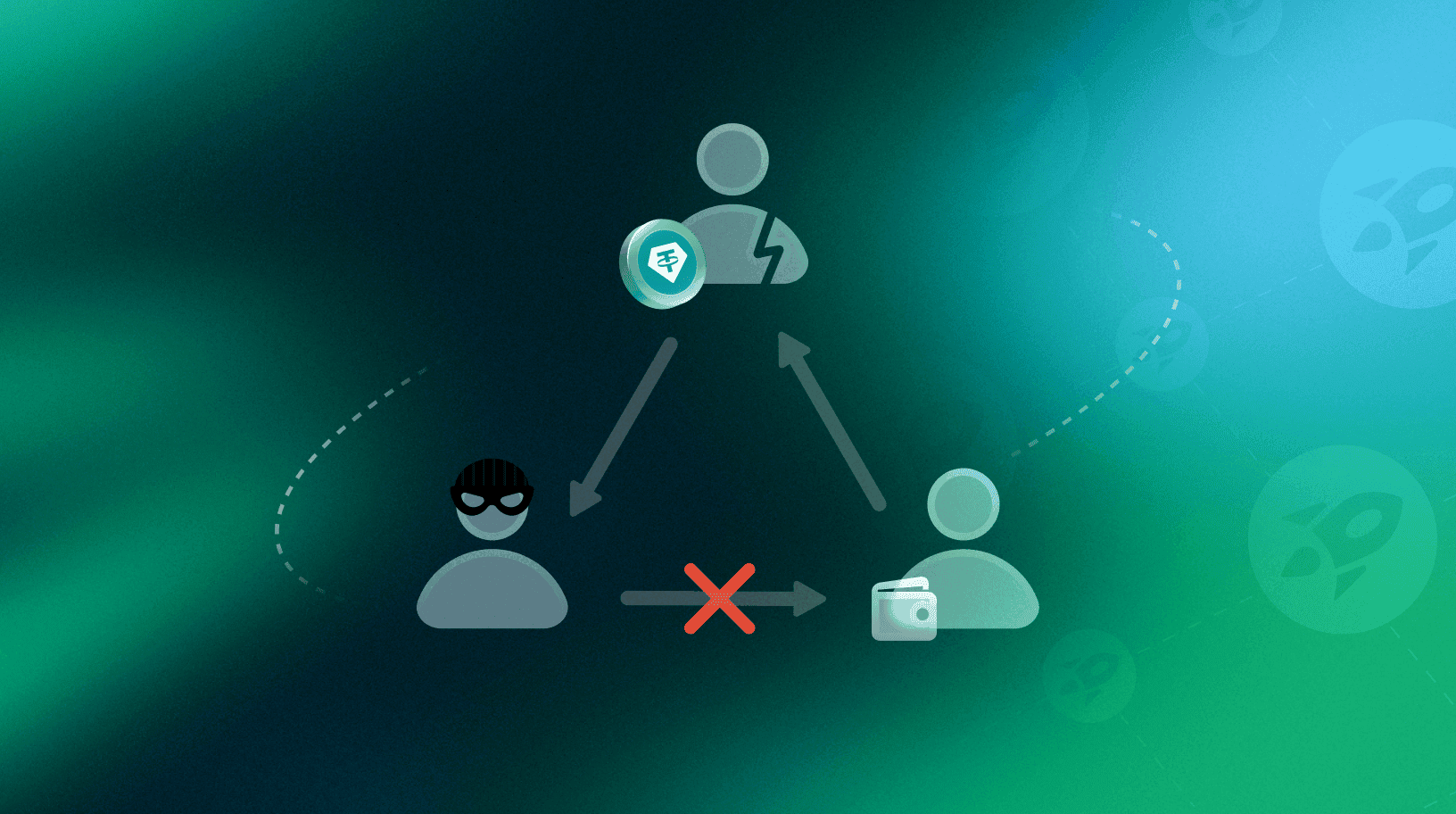
Trading crypto through P2P platforms is one of the most convenient ways to move money between fiat and digital assets — but fraud risks are real and evolving. One of the most cunning P2P schemes is the so-called “triangle.” Its real danger is that it can drag an honest trader into a criminal investigation without their knowledge. In short: a fraudster routes a stranger’s payment through your card so that you, the honest trader, end up exposed financially, legally, and reputationally. Below, we’ll break down how the triangle works, how to avoid it, and what to do if you’ve already been caught in one.
This article focuses mainly on P2P risks for users working with RUB and other CIS payment rails. Specific bank rules, legal procedures, and chargeback practices vary by country — always verify the rules in your own jurisdiction.
How big is the problem in 2026?
Before we dive into the mechanics, some context on why this matters more than ever:
| Fraud Metric | 2024 | 2025 |
| FBI IC3 crypto-fraud losses (US) | $9.3 Billon | $11.4 Billion (+22%) |
| Crypto-related complaints | ~150,000 | 181,565 (+21%) |
| Average loss per complaint | ~$51,000 | $62,604 |
| Chainalysis estimate of total crypto scam volume | $12 Billion (revised) | $14–17 Billion |
Sources: FBI Internet Crime Complaint Center (IC3) 2025 Annual Report and Chainalysis 2026 Crypto Crime Report.
Crypto scams now account for more than half of all cybercrime losses reported in the United States. P2P fraud patterns are becoming more visible because they connect crypto transactions with traditional bank transfers, which makes disputes harder to resolve. The triangle is one of the most dangerous P2P fraud patterns because, unlike a straightforward “fake payment” scam, it doesn’t just steal from one party — it weaponizes an innocent trader.
What is the P2P “triangle”?
The triangle is a fraud scheme with three parties: the scammer, an honest P2P trader (that’s you), and a completely unrelated victim. Each party plays a role, but only the scammer knows the full picture.
How the scheme works, step by step
Step 1 — The scammer finds a victim. The fraudster posts a fake listing on a marketplace — for example, a brand-new iPhone at a suspiciously low price. To explain the “great deal,” they invent a backstory: an unwanted gift, urgent need for cash, moving abroad. The victim, seeing the bargain, agrees to buy.
Step 2 — The scammer opens a P2P deal with you. At the same time, the scammer initiates a buy order on a P2P platform and selects you — an honest trader — as the counterparty.
Step 3 — The victim’s money lands on your card. The scammer hands your bank-card details to the victim, claiming this is the seller’s account for the iPhone. The victim sends the money, fully believing they’re paying for a phone.
Step 4 — You release the crypto. You see the funds arrive on your card, confirm receipt, and release the cryptocurrency to the scammer. From your perspective, everything looks routine.
Step 5 — The fallout. The scammer disappears with the crypto. The victim never receives the iPhone, contacts their bank or the police, and provides them with the only payment detail they have — your card number. You are now under investigation.
If third-party transfers are your main concern, our guide explains how to buy USDT legally while keeping your card away from risky P2P payment chains .
Why is this so dangerous?
The moment the victim files a police report, you become the prime suspect. The money landed in your account — and proving you weren’t in on the scheme is harder than it sounds.
One of the most common mistakes traders make in disputes is failing to properly document the deal as it unfolds. Consequences of being caught in a triangle:
- Legal exposure. You may be summoned for questioning, named in a criminal investigation, or have your accounts frozen during the inquiry.
- Financial loss. Depending on the jurisdiction and the available evidence, the trader may be asked to return the funds or may face a civil claim from the victim. Meanwhile, the crypto you sent to the scammer is gone — on-chain transactions are irreversible.
- Reputational damage. Any link to a fraud case is a stain on your trading profile, your bank relationships, and your standing on P2P platforms.
- Bank-account blocks. Russian and CIS banks routinely freeze accounts flagged in fraud reports under AML rules, sometimes for months.
How to avoid the P2P triangle: 6 essential rules
The triangle works because it preys on speed and inattention. Scammers count on you wanting to close the deal fast. The slower and more methodical you are, the less attractive a target you become.
Rule #1 — Vet your counterparty
Before you accept a deal, study the other party’s profile carefully.
- Deal count. A user with only 2–5 completed deals (or none at all) is a red flag. Experienced traders typically have hundreds of successful transactions. Most established platforms let you filter for counterparties with 100+ completed orders — use that filter.
- Reviews. Read the feedback. If past partners have flagged suspicious behavior, walk away.
- Account age. Prefer users who have been on the platform for at least 30 days, preferably much longer.
Why it matters: Scammers churn through accounts. They burn one, create another, and keep moving. A long, clean history is hard to fake.
Rule #2 — Verify the sender’s details
This is the single most important check in the whole process.
- Match the name. The full name on the incoming bank transfer must exactly match the name on the counterparty’s P2P profile. If they don’t match, do not release the crypto.
- No third-party payments. Some traders will warn you upfront that “the money will come from another person.” This is technically allowed by some platforms, but it dramatically increases your risk. The safest move is to refuse. State in your ad: “Third-party payments are not accepted.”
Why it matters: Scammers deliberately use someone else’s banking details to hide their identity. Skip the name check and you’re walking straight into the triangle.
Rule #3 — Ask for a payment comment
Tell the counterparty in advance what to write in the transfer memo. Keep it neutral and tied to the actual transaction — for example: “P2P order #[order ID]. No third-party payment.” or “P2P order #[order ID], sender name matches the platform profile.”
- Verify the comment text. If it’s missing, garbled, or contradicts what you asked for, stop and investigate.
- Refusal is a red flag. If a counterparty refuses such a simple request, find someone else.
Why it matters: A payment comment is evidence that the transfer was voluntary and unrelated to a separate dispute. If a chargeback claim ever lands, that single line of text can be the difference between resolution and a frozen account.
Rule #4 — Use platform verification, not DIY KYC
If something feels off, rely on the verification tools the P2P platform itself provides — merchant badges, completed-KYC indicators, and trust scores. Avoid collecting and storing ID photos yourself unless you fully understand the legal and privacy obligations in your jurisdiction; in many regions, holding another person’s identity documents without a clear lawful basis can create its own risks under data-protection rules.
- Lean on platform signals. Verified-merchant status, completed-KYC marks, and dispute-resolution history tell you most of what you need to know.
- Ask clarifying questions in chat. A scammer using stolen credentials will fumble basic questions about “their” account.
Why it matters: Real users tend to behave consistently with their profile. Scammers tend to dodge platform-side checks and prefer to move conversations off-platform, which is the moment to walk away.
Rule #5 — Be skeptical of “too-good-to-be-true” offers
If the terms look too generous, they probably are.
- Compare to the market rate. A few percentage points off-market is normal. A 5–10% deviation is a serious red flag.
- Ask yourself why. Why is this counterparty willing to lose money on the rate? In legitimate markets, there’s no good answer.
Why it matters: Scammers use sweetheart pricing to rush you. Their goal is to make you skip the checks you’d normally run.
Rule #6 — Document everything
Capture every step of the deal: the chat with the counterparty, the order details, the payment notification, and the crypto release confirmation.
- Take screenshots. Conversations, transaction IDs, timestamps — all of it.
- Store records long-term. Don’t delete after the deal closes. Disputes can surface weeks or months later.
- Use platform chat, not external messengers. If a counterparty asks you to move the conversation off-platform, refuse. Off-platform communication is one of the top warning signs identified by major P2P operators.
Why it matters: If you’re ever accused of complicity, a well-documented paper trail is the strongest proof that you acted in good faith.
How a structured P2P environment helps
One of the reasons people are moving their P2P activity into Telegram is that the right platform removes several attack vectors at the architecture level. The xRocket P2P Market offers:
- An in-bot escrow guarantor — the crypto is locked the moment the deal opens, so neither side can disappear mid-trade.
- Verified merchant profiles with deal history, completion rates, and reviews visible before you agree to anything.
- Fiat-to-crypto options via supported payment rails — users can buy and sell crypto through the available RUB payment methods inside the xRocket ecosystem. The payment flow may be more structured than a random card-to-card transfer, but bank-side AML checks and platform limits still apply, so verify payment details, limits, and counterparty information before every transaction.
- Multi-pair support — USDT/RUB, USDT/UAH, USDT/KZT and others, so you don’t have to leave the platform to find liquidity.
- In-Telegram dispute resolution with chat logs preserved automatically — no more arguments about “what they said in DMs.”
If you want a deeper dive into how peer-to-peer trading works, read our explainer: What is P2P and how does it work. For a complete walkthrough of buying crypto safely, see: How to buy cryptocurrency.
Conclusion: careful checks beat a costly investigation
The triangle scheme works on inattention and trust — and it can usually be avoided with a few minutes of careful verification per deal. The trade-off is simple: spend an extra five minutes checking the counterparty, or risk spending months explaining yourself to a bank’s fraud department.
For traders who want to reduce some operational friction, the xRocket Telegram bot offers in-platform escrow, verified merchant profiles, and supported fiat-to-crypto payment rails. None of this eliminates fraud risk on its own — your own due diligence remains the most important factor — but a structured environment makes the standard checks easier to apply consistently.
The triangle is just one pattern among many. To be fully prepared, read about the Top 7 cryptocurrency scam schemes.
Sources
- FBI Internet Crime Complaint Center (IC3), 2025 Annual Report (published April 2026).
- Chainalysis, 2026 Crypto Crime Report: Scams (published January–February 2026).
- xRocket official website, Terms of Service, and AML Policy — t.me/xRocket.
- P2P safety guides published by major exchanges (Binance P2P, Bybit P2P, OKX P2P, KuCoin P2P) on third-party payments and triangle-scam prevention.
- Local banking and AML rules applicable to the trader’s jurisdiction.

Create an account in xRocket today and start applying your knowledge in practice.
Create an account in xRocket today and start applying your knowledge in practice.